
Transform Your Ideas Into Published Masterpieces with Our Expert Book Publishing Services
At Book Publishing Site, we make your desire of being a published author a reality. Our comprehensive range of book publishing services may assist both novice and seasoned writers seeking professional guidance when self publishing a book. We collaborate with leading retailers like Amazon, Lulu, and Kobo to publish your book on major sites like Kindle Publishing and Barnes and Noble Publishing. With our specialized services, created to align with your objectives and vision, let us help you every step of the way.
Get Published by the Best E-Book Publishers






Comprehensive Book Publishing Services for Every Author
At Book Publishing Site, we provide a comprehensive range of book publishing services to meet your requirements.

Book Publishing Service
Bring your manuscript to life with expert guidance and support.

Amazon Publishing Service
Get your book on the world's largest online marketplace with our expert KDP services.

Book Writing Service
Need help putting your ideas on paper? Our professional writers are here to assist.

Book Editing and Proofreading Service
Before your book reaches the stores, make sure it is well-polished.

Book Marketing Services
Promote your book effectively across all platforms.

Author Website Development Services
Build a professional online presence with a custom author website.

Audiobook Service
Transform your written work into an engaging audiobook.

Book Cover Design Service
Make your book stand out by using a professionally designed cover.
Your Trusted Partner in Book Publishing and Beyond
Book Publishing Site is more than simply a book publishing company; we are your success partner. With years of expertise in the book publishing sector, we provide a specialized approach to meeting your individual requirements. Whether you're publishing a book with Amazon Publishing or considering self-publishing, we have the tools, knowledge, and skills to make your book stand out. Our dedication to quality, honesty, and results guarantees that each author we collaborate with achieves their publication objectives.
LET’S START WRITING A BOOK Call Now
Take Control of Your Story with Our Self-Publishing Services
Way to publish a book? Our seasoned team of professionals is dedicated to
Self publishing a book has
become a straightforward process, thanks to Book Publishing Site. Our
service emphasizes flexibility, allowing authors to maintain complete creative control over
their works while providing access to top industry resources. We support authors in navigating
the landscape of self-publishing platforms, from Lulu Publishing to Kindle Publishing,
ensuring
they find the perfect match for their book's needs.
Our team is equipped to assist with formatting, design, and marketing, covering all the bases to
make your publishing journey smooth. We handle the technical complexities so you can focus on
what you love to do best, which is write. You can rely on us to help you navigate the process
and make self-publishing easy and stress-free. Together, let's get your book read by the people
it so well deserves.
experience
written &
published
in all
genres
Unlock Global Reach with Amazon Publishing Services
Looking to captivate millions of readers globally? Our Amazon Publishing
services let you launch your book on the world's greatest online marketplace. Whether you want to
publish a print book, an eBook, or a mix of the two, we'll make sure your work shines on the Kindle
Direct Publishing (KDP) platform.
Our team at Book Publishing Site is well-versed in Amazon's algorithms, so we can effectively
arrange your book for maximum visibility and success. Choose to publish with us and gain the peace
of mind that comes from knowing seasoned professionals are handling your book. With our expert
guidance, make your publishing journey smooth and successful.
Amplify Your Voice with Audiobook Publishing and Narration
Book Publishing Site specializes in audiobook publishing, translating your written
work into engaging audio experiences. Our team recognizes the increasing demand for audiobooks,
which makes it critical for authors to reach a larger audience. Our professional audiobook
narration services connect you with exceptional narrators that bring your narrative to life,
captivating listeners and delivering an immersive experience.
As a renowned book publishing company, we will walk you through the full process, from recording
and editing to distribution on key platforms. With our help, you may broaden your audience and
engage with readers in new ways. Allow us to help you enhance your voice and make your book
available to the thriving audiobook industry!

A Sneak Peek into Some of Our Recently Published Books
We have successfully published thousands of books of varying scope and genres. Take a look into some of our Recently Published Books on Amazon:
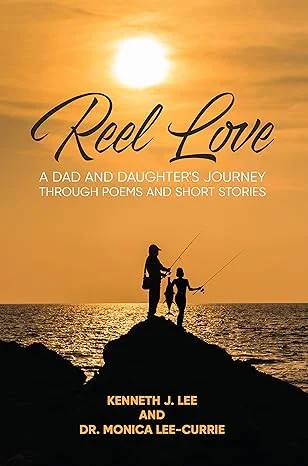
Book Name: Reel Love
Dr. Monica never knew that her father was a writer of poetry and always wondered where she got her skill of writing from. While sharing each other's dreams of one day writing a book, Kenneth introduced Dr. Monica to the past time of fishing, which was a hobby he picked up while living in Pennsylvania...
Author Name: Monica (APP) Dr. Monica Lee
Amazon Published Book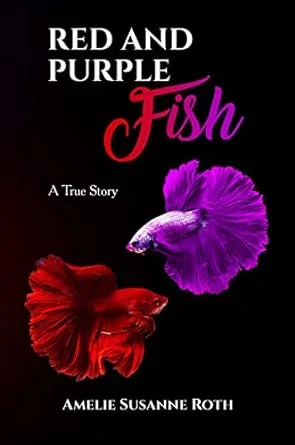
Book Name: Red and Purple Fish: A True Story
Being asleep for two weeks straight? What a blast! But a coma is nothing like that, besides the general belief even among many medical professionals. During an induced coma, many patients experience anything from beauty to terror to their worst nightmares. ...
Author Name: Susanne
Amazon Published Book
Hooked For Life
ishing has always been an inescapable outlet for me and I have traveled throughout the United States and Southeastern British Colombia in search of the perfect waters. When I was younger, fishing was an epic game of hide and seek. Growing up, I cherished the time I spent with my father...
Author Name: Tom Williams
Amazon Published Book
Book Name: Building AbleNet: A Remarkable Journey, Creating Assistive Technology and Impacting Lives
Building AbleNet is a compelling entrepreneurial adventure detailing the journey this author, and her two co-founders, embarked on to champion the belief that children and adults with severe disabilities can be recognized as the whole and capable individuals they are, when given the tools to prove it....
Author Name: Cheryl Knight
Amazon Published Book
Book Name: A Sober Society
For some forty years, my life was consumed by the effects of drugs and alcohol abuse. When life finally appeared, all was gone: jobs, family (wife and kids) were gone, so was my good health, money, my home. There was no other choice but to get help for my problems...
Author Name: Ernest Allen
Amazon Published Book
Book Name: The Truth Together
Rodgers has a keen eye for period detail and a masterful ear for
dialogue--a fine debut!" — David Krugler, author of The Dead Don't Bleed and
Rip the Angels from Heaven.
Families are complicated. The Herndons are no exception.
Author Name" Kelly Rodgers
Amazon Published Book
Book Name: Orinthia: Super Mental
I know what you’re thinking. No, really. I know what you’re thinking.
It sounds crazy. Like, straight out of a book, crazy. But it’s true.
You don’t believe me. That’s fair, I wouldn’t believe me either. Just a
couple weeks ago I thought I had finally lost what was left of my mind. My
marbles have been far and few between for a loooong time, but I’m finding
them again.
Author Name: Mackenzie Mcmillen
Amazon Published Book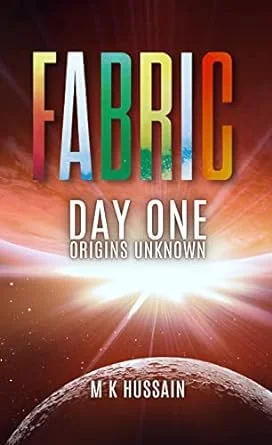
Book Name: Fabric (Series)
Enjoy the Fabric series - a step into the Unknown, turning until you bypassed Limbo and approaching Potential Crossroads...
Author Name: Kamar Hussain
Amazon Published Book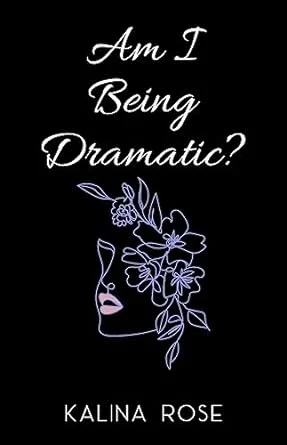
Book Name: Am I Being Dramatic?
Enjoy the Fabric series - a step into the Unknown, turning until you bypassed Limbo and approaching Potential Crossroads...
Author Name: Kalina Rose
Amazon Published Book
Book Name: The Haunting of Hastings House
Emily Buchanan has lost everything that she loves in a tragic car accident. She has nowhere to turn until an old friend contacts her about an opportunity to be the housekeeper at a historic mansion in South Carolina. Little does Emily know she is about to meet the ghost of Hasting's House, a violent spirit that has haunted the estate for centuries and is hell-bent on revenge.
Author Name: Sarah Morgan
Amazon Published Book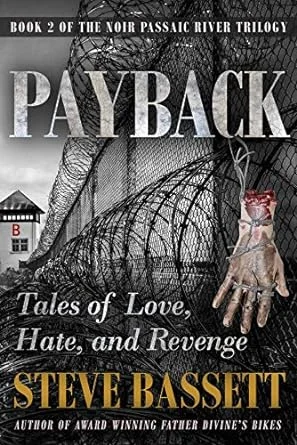
Book Name: Payback - Tales of Love, Hate and Revenge (Passaic River Trilogy Book 2)
Payback - Tales of Love, Hate and Revenge, the second book of the Passaic
River Trilogy, is the WINNER of the 2020 READER VIEWS LITERARY AWARD, FIRST
PLACE Mystery/Thriller.
Payback is a drama so intense that it would be improbable anywhere but 1946
Newark. Across the country millions were dealing with the loss of loved
ones, and horrible memories were being buried for the greater good. But not
in Newark.
Author Name: Steve Bassett
Amazon Published Book
Book Name: Last Man on The Planet
In the aftermath at the end of the world, the two complete strangers from opposite sides of the planet come together and build a new life. They create a happy and peaceful existence; until the old human traits of prejudice and hate rise from the ashes and make the mistake of trying to take it away from them. The strange dreams they inhabit slowly start to unveil the true nature of the world they now reside in and the mysterious past that they share.
Author Name: Sarah Morgan
Amazon Published Book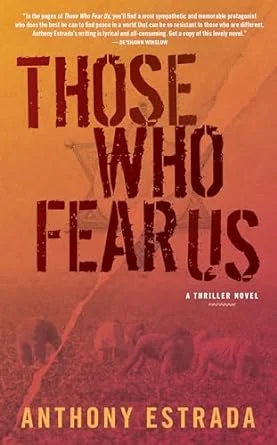
Book Name: Those Who Fear Us
Sergeant Carlos Lopez patrols the streets of the isolated, sleepy California
farming community of San Eugenio. Searching for meaning, purpose, and
dignity, Sgt. Lopez finds it at the expense of the town’s Latino migrant
population.
“I knew I was going to die. And somehow, I knew it’s exactly what I needed
most.”
Author Name: Anthony Estrada
Amazon Published Book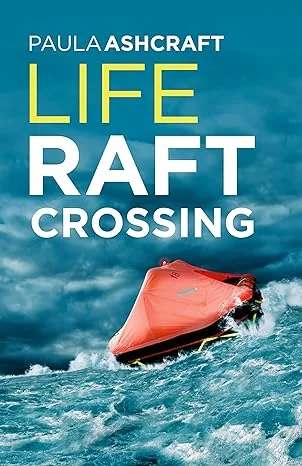
Book Name: Life Raft Crossing
For all you thriller fans out there. This one’s for you. Do you like to be kept on a knife’s edge? Do you like twists and turns when you least expect it? Then this book is for you—great characters, which leads to an even better plot. So make sure you read the entire book till the very end, and all we can say is… buckle up and get ready for a wild ride!
Author Name: Paula Ashcraft
Amazon Published Book
Book Name: Margie's Revenge
Henry Larson is a renowned chamber musician and respected professor. Margie Hart is an adorable associate professor who comes to his office one wintry afternoon with a heartfelt plea. Will he help her save the job of her friend, Alicia Baptiste? Henry admires Alicia and decides to take up the cause.
Author Name: Jay Trott
Amazon Published Book
Book Name: Jefferson's DNA
Dave Hutchinson, a recently retired professional project manager has been hired to manage a special secret project on behalf of the Monticello Association, the owner of the Thomas Jefferson Cemetery at Monticello. In July 2022, Hutchinson is meeting with Jonathon Coolidge, the current president of the Monticello Association, to hear the details of the origins and goals of the project.
Author Name: Reid Eikner
Amazon Published Book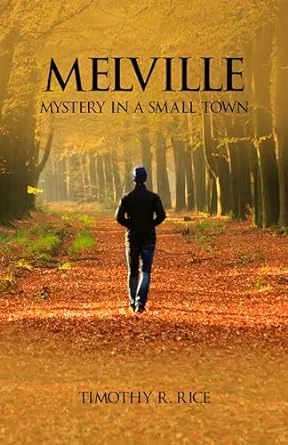
Book Name: Mystery in a Small Town
Small-town boy Humphrey Larsen comes back home to Melville, North Carolina, in 1979 after college and traveling around the world. He expects a quiet life returning, doing what he wants after a big inheritance. But he finds that his hometown has changed. And he has changed. His inquisitiveness gets him in trouble...
Author Name: Timothy Rice
Amazon Published Book
Book Name: MILK: MILK TRILOGY (NEW)
The Danish investigator Tom Halvorsen had just arrived home, to his newly bought small but cozy house. placed in one of the prosperous suburbs in the northern part of Copenhagen. Tired after a long day of work seated on his old chesterfield sofa with a simple cup of tea, in front of the fireplace, about to unwind...
Author Name: Michael Owino
Amazon Published Book
Book Name: MILK: Law Enforcement: "Past, Present, Future"
Samantha and Marcie are best friends, and partners with the police department. Samantha, during her off hours, is studying to be an attorney. She is a recent widow raising a teenage daughter after her husband was murdered while working under cover. His assailant was never found...
Author Name: Lawana Scales
Amazon Published Book
Book Name: The Battle at Fort Anchor
In 1866 after the great Zulu wars in Africa reached its conclusion, an incident happened with far-reaching influence. Italy suffered an embarrassing naval defeat by a smaller navy and afterwards ordered eight massive Armstrong cannons for two new ironclad battleships they were having built...
Author Name: Patrick Whelan
Amazon Published Book
Book Name: Michael Antonowicz
Michael Antonowicz has imagined a story ripped from the headlines of the war in Ukraine. Operation Sunflower follows Marine Gunny Sergeant Jerry "Graze" Grazinski into the mountains of Afghanistan and the deadly battle with Isis that ended his military career and nearly his life as well...
Author Name: Operation Sunflower
Amazon Published Book
Book Name: A Shameful War
The end of 'organised' combat between the forces loyal to King Charles I and those loyal to Parliament. Charles, isolated in Oxford, is slowly losing all control as the New Model Army under Generals Fairfax and Cromwell deal the final hammer-blows to a disorganised and demoralised royal army...
Author Name: Jim Marshall
Amazon Published Book
Book Name: Winning the Obstacle Race: A Memoir
Annie Frazer Simpson is a woman who loves dogs and music, history and the countryside. She has never learned how to give up, though plenty of times she might have, relying on resourcefulness, determination and a wry sense of humour to get her through...
Author Name: Annie Frazer
Amazon Published Book
Book Name: An Ordinary Life: With Extraordinary Moments
In this deeply personal book, K.C. Bernard shares her tumultuous journey
from
victimhood to freedom.
Weaving excerpts from her journals into her writing, Bernard draws us into a
child's nightmare, repressed memories and an unspeakable secret. With the
help of a small inner circle, Bernard navigates her way through the maze of
betrayal and pain and frees herself from the chains of the past....
Author Name: Kamini (K.C. Bernard)
Amazon Published Book
Book Name: It’s Yours, If You Want It!
The book is about my life as an athlete from my early days in high school to
the present. At 80 years old I still have the fire in me to compete and
reach my goals despite several hurdles that had to be cleared.
I’m hoping that those who read my story, whether young or in advanced age,
can be inspired to achieve their goals, whether in athletics or in life
itself...
Author Name: John Mitsopoulos
Amazon Published Book
Book Name: My Cancer Battle And How I Won
When I found out I had Cancer, I only knew one person who had beat it, and she did not come to mind. Finding out the President had beat it without Chemo Or Radiation gave me hope. I feel my assistance was critical to my beating cancer. Your own research and knowledge, along with your gut feelings, will help guide you...
Author Name: Alfred G Lewis
Amazon Published Book
Book Name: Gamachu & Mindfulness
Dr. Zergabachew Asfaw has been practicing medicine for over Thirty years in Bronx New York. He graduated from Addis Ababa university as a doctor of medicine in 1979 and as a young graduate, he served as a medical director of st Mary hospital in Axum, Tigray, northern Ethiopia when Eritrean Liberation Front and Tigray Liberation Front were fighting against the Ethiopian Military rule of Mengistu Haile Mariam...
Author Name: Dr. Zergabachew Asfaw
Amazon Published Book
Book Name: Tilly and the Sleepyhead Sun
Tilly is a little owl, who lives inside the very top of a clock tower. Her job every day is to ring and shine the bell for her village. But one day, the sun doesn't rise! Explore with Tilly as she problem solves different creative and unexpected ways to wake up one very sleepy sun...
Author Name: Emily Pray
Amazon Published Book
Book Name: Busy Minds and Playful Times
Busy Minds and Playful Times by Paula Walters evokes the crunch of sweet dough treats for the readers, especially boys. It is a fine collection of poetry that makes a unique art of noticing small things in life. This short collection of poems has a sense of musicality that never feels overstuffed and exhaustive...
Author Name: Paula Walters
Amazon Published Book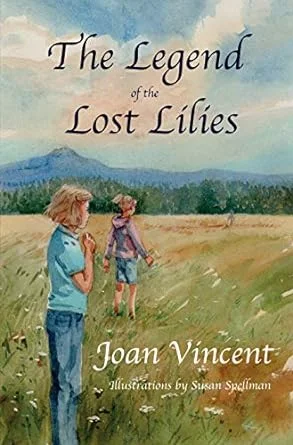
Book Name: The Legend of the Lost Lilies
CHAPTER BOOK AGES 7 & UP. From the author of MOLLY MARBLES comes a tale of mystery, fantasy and revelation. Two sisters, thirteen-year-old Emelyn and nine-year-old Abitha, move with their parents from the bustling city of Boston to a 200-year-old farmhouse nestled in the shadows of the White Mountains...
Author Name: Joan Vincent
Amazon Published Book
Book Name: The Adventures of... Harold the Hamster
This is a story about Harold the hamster that loves to play with his toys.
Each toy he plays with is a new adventure for him.
Enjoy reading the story of his adventure while laughing at his comments.
Author Name: Walter Allan
Amazon Published Book
Book Name: The Forgiving Heart
This book provides a thoughtful and soul enhancing discussion of the way we see the world. It doesn't change the world around us but encourages an outlook that is tolerant and forgiving, an attitude that promotes a greater sense of peace and happiness
Author Name: Rod J. Linton
Amazon Published Book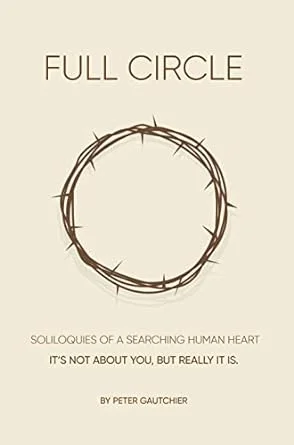
Book Name: FULL CIRCLE
This book provides a thoughtful and soul enhancing discussion of the way we It is an introspection of feelings, rational thought and present- day realities expressed in one or two pages through simple prose, non- rhyme and rhyming poetry in the form of soliloquies. The author conveys that no matter the issue behind the soliloquy, God has been and always will be guiding each of us through the obstacles and disappointments of our lives...
Author Name: FULL CIRCLE
Amazon Published Book
Book Name: Roots To America
Warren Peace takes readers on a journey through the chaos and traumatic memories in his life while he seeks to pursue goals and dreams he hopes will help those struggling with the same issues and who overcame similar obstacles to achieve something greater than him or herself...
Author Name: Julius Sweet
Amazon Published Book
Book Name: AL Thaahir; The Evidence, the Outer, the Manifest
Al Thaahir: The Evidence, the Outer, the Manifest is a reflection that summarises yet magnifies, that shines a light on what we tend to forget. It is a reminder of what we need to do to bring ourselves to be connected again with the Higher Power. It is here, in the now, that many are too distracted to feel this connection. But we are never far from what witness to us the presence of God...
Author Name: Sahar Maurice
Amazon Published Book
100% Customer Satisfaction

2500+ Customers

Flexible Plans

All Royalties Belong To You
A Simple, Streamlined Publishing Process Designed for Success

Initial Consultation
We'll talk about your publishing goals and customize our services to meet your requirements.

Manuscript Evaluation
We examine your work and give input to ensure that it is ready for publication.

Editing & Proofreading
Our editing experts polish your work with a professional touch.

Design & Formatting
We handle all aspects of production, from the cover design to the book's layout.

Publishing
We publish your book across leading platforms like Amazon, Lulu, and Kobo.

Our Clients Speak Louder than Anyone About Our Work
Our clients love us and In today’s world of Cut-throat competition, it’s not that simple to make your clients fall in love with you. See what our clients say about us: